
- Cirque du Soleil’s “Crystal” at Fishers Event Center, a photo preview
- The Gatlin Brothers at Brown Country Music Center
- The Black Keys will perform at Innings Festival, Feb 21.
- Gary Clark Jr. will rock the Innings Festival 2025
- Fall Out Boy to appear at Innings Festival in February
- Kris Kristofferson passes away at 88
On The Y-Verse, Lisa B Builds an Alternate Route Through the Music of the ’60s
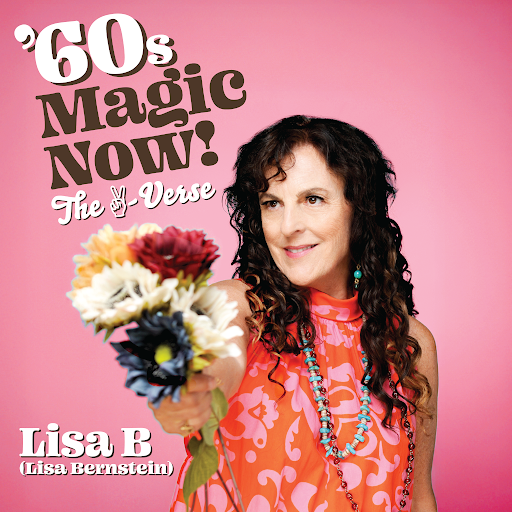
The most revealing word in the title ’60s Magic Now!: The Y-Verse may be “now.” Lisa B’s album draws its repertoire from music deeply associated with another era, yet nearly every interpretive decision is designed to prevent those songs from remaining there.
The Oakland singer, poet, spoken-word artist and intuitive reader has released the album in physical form alongside its digital edition. Rather than assembling a broad survey of 1960s music, she has chosen a compact seven-track sequence with a peculiar internal rule: every covered song contains the letter Y in its title.
That coincidence becomes the album’s conceptual doorway. Y can be heard as “why,” seen as a shape that suggests a peace symbol and imagined as the marker for a parallel universe. Lisa uses that playful device to create permission for radical reframing. Familiar songs enter the Y-Verse and come out carrying new perspectives, rhythms and spoken additions.

“Everybody Get Together,” the latest focus track, is perhaps the most direct example. A newly released lyric video emphasizes the song’s words while the arrangement travels from jazzy bolero to montuno salsa. Dr. J.E. Rose’s violin adds bittersweet intensity, and Lisa’s voice shifts between conversational intimacy, soul grit, R&B inflection and clear high-register phrases.
Elsewhere, the album’s alternate routes become even more explicit. “Windy” is connected with Oya, the Yoruba wind goddess. “Spooky” gives greater attention to the mysterious woman at its center. “Ruby Tuesday” becomes a character study. “Dear Mr. Fantasy” brings in Lyrics Born for an original rap that places the burden of entertaining others in the title figure’s own voice.
The approach is inseparable from Lisa’s background in poetry. She has spent decades thinking about how language changes when it is spoken aloud, breathed, timed and placed in relation to an audience. Her work as an intuitive reader adds another layer to the album’s emphasis on listening beneath obvious surfaces. Five tracks incorporate new poetic raps or spoken interjections.
The physical edition gives The Y-Verse an appropriate form for a project concerned with revisiting cultural memory. Yet the album’s value lies in its refusal to preserve that memory unchanged. “Everybody Get Together” brings the point home: a song associated with 1960s communal idealism can still ask something of the present, provided an artist is willing to let it change shape
Related Posts




Latest Backstories
-
 Judy Collins Enchants at Brown County Music Center: A Night to Remember, March 22, 2025
The air was thick with anticipation on March 22,...
- March 28, 2025
-
 The story behind “Diamonds and Rust”, a song by Joan Baez, about Bob Dylan
The story behind the song “Diamonds and Rust” is...
- April 1, 2024
-
 Backstory: Bob Seger’s “Shame on the Moon”
Bob Seger’s 1982 hit “Shame on the Moon” was...
- December 18, 2023
-
 The Real Story behind the song, “Mr. Bojangles”
In our continuing weekly series, we examine the backstory...
- September 6, 2023
-
 RIP Robbie Robertson.
Canadian, Robbie Robertson, legendary lead guitarist of “The Band”...
- August 9, 2023
-
 Celebrate Good Times: The Story Behind Kool and the Gang’s Hit Song
If you have ever been to a wedding, a...
- July 12, 2023
Latest Photo Galleries
-
 Styx in Noblesville Indiana, the Windy Cities Tour
Styx brought their signature blend of progressive rock anthems,...
- August 12, 2026
-
 Jack Johnson Delivers Warm Vibes and Surprise Collaborations at Ruoff Music Center
On a stormy July 4 evening at Ruoff Music...
- July 6, 2026
-
 Post Malone Brings Big Energy to Lucas Oil Stadium on the Big Ass Stadium Tour
Post Malone has carved out a special place in...
- June 15, 2026
-
 Kenny Wayne Shepherd Band Honors 30 Years of Ledbetter Heights at Brown County Music Center
The Kenny Wayne Shepherd Band rolled into the Brown...
- May 7, 2026
-
 The Black Keys: Gritty Blues-Rock Gold at Louisville Palace
The Black Keys have a way of making a...
- May 5, 2026
0 comments