
- Cirque du Soleil’s “Crystal” at Fishers Event Center, a photo preview
- The Gatlin Brothers at Brown Country Music Center
- The Black Keys will perform at Innings Festival, Feb 21.
- Gary Clark Jr. will rock the Innings Festival 2025
- Fall Out Boy to appear at Innings Festival in February
- Kris Kristofferson passes away at 88
2ŁØT Find the Harder Road After Survival on ‘RE/SOLVE’
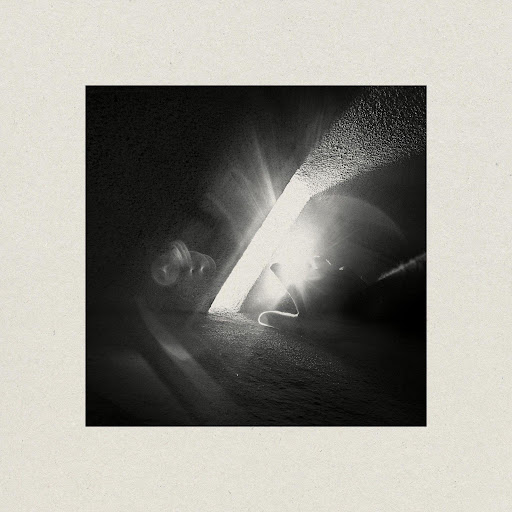
A debut built around disorder leaves an obvious question behind: what happens once the immediate crisis has passed? On RE/SOLVE, Wichita five-piece 2ŁØT spend 16 tracks answering it without pretending recovery produces a clean ending. The follow-up to Entropy is framed as a “Second Hero’s Journey,” and that idea gives the album its strongest organizing principle. These songs live in the less dramatic territory after the breakthrough, when identity has to be rebuilt and old patterns still have a way of returning.
That inward turn does not make RE/SOLVE musically narrow. 2ŁØT continue developing the Electronic Jam Music language they have built from hip-hop, funk, soul, jazz, rock, improvisation and electronic production. The album moves from hypnotic loops into live-band interplay and spacious reflection while maintaining a coherent emotional arc. Its stylistic breadth feels tied to the subject: transformation rarely happens in a straight line, and the music behaves accordingly.
The newly available “Don’t Give Up On Me,” featuring Jon Batiste, arrives at a crucial point in that sequence. Positioned after “Come Together,” it carries a title that reads like both a request and a command. Batiste joins a record already crowded with notable collaborators, but his presence works best as part of the album’s larger community rather than as a celebrity detour.

Earlier tracks establish why that plea matters. “Favorite Star,” produced by RY X, examines the distance between an old image of someone and the person that individual has become. “I Hurt Myself Again,” with Elise Trouw and Cameron McCloud, considers memory and the way time changes the meaning of pain. “Lose My Mind” circles the destabilizing aftermath of a fractured relationship.
The guest list is broad, yet the sequencing keeps RE/SOLVE from turning into a compilation. Frank Moka appears on “Tread,” where jazz and improvisational instincts come forward. Robert Randolph joins “I Need You To Believe,” while Eric Krasno appears on “Iris.” Mariel Jacoda helps close the record with “I Want It All,” leaving it on a deliberate tension between gratitude and desire.
That ending is important. A weaker version of this concept might have treated self-actualization as a finish line. RE/SOLVE instead keeps circling back to appetite, doubt, memory and connection. Rudy Love Jr.’s description of the album as a cyclical process of reflection and transformation is borne out by its shape. The songs accumulate perspectives, setbacks and small recognitions rather than marching toward enlightenment.
RE/SOLVE is strongest when its conceptual ambition stays attached to ordinary emotional problems. “Don’t Give Up On Me” may carry one of the album’s clearest appeals, but it lands because the preceding songs have shown how complicated staying, changing and believing can become. The second journey turns out to be harder than the first, and 2ŁØT make that difficulty the point.
Related Posts





Latest Backstories
-
 Judy Collins Enchants at Brown County Music Center: A Night to Remember, March 22, 2025
The air was thick with anticipation on March 22,...
- March 28, 2025
-
 The story behind “Diamonds and Rust”, a song by Joan Baez, about Bob Dylan
The story behind the song “Diamonds and Rust” is...
- April 1, 2024
-
 Backstory: Bob Seger’s “Shame on the Moon”
Bob Seger’s 1982 hit “Shame on the Moon” was...
- December 18, 2023
-
 The Real Story behind the song, “Mr. Bojangles”
In our continuing weekly series, we examine the backstory...
- September 6, 2023
-
 RIP Robbie Robertson.
Canadian, Robbie Robertson, legendary lead guitarist of “The Band”...
- August 9, 2023
-
 Celebrate Good Times: The Story Behind Kool and the Gang’s Hit Song
If you have ever been to a wedding, a...
- July 12, 2023
Latest Photo Galleries
-
 Styx in Noblesville Indiana, the Windy Cities Tour
Styx brought their signature blend of progressive rock anthems,...
- August 12, 2026
-
 Jack Johnson Delivers Warm Vibes and Surprise Collaborations at Ruoff Music Center
On a stormy July 4 evening at Ruoff Music...
- July 6, 2026
-
 Post Malone Brings Big Energy to Lucas Oil Stadium on the Big Ass Stadium Tour
Post Malone has carved out a special place in...
- June 15, 2026
-
 Kenny Wayne Shepherd Band Honors 30 Years of Ledbetter Heights at Brown County Music Center
The Kenny Wayne Shepherd Band rolled into the Brown...
- May 7, 2026
-
 The Black Keys: Gritty Blues-Rock Gold at Louisville Palace
The Black Keys have a way of making a...
- May 5, 2026
0 comments