
- Cirque du Soleil’s “Crystal” at Fishers Event Center, a photo preview
- The Gatlin Brothers at Brown Country Music Center
- The Black Keys will perform at Innings Festival, Feb 21.
- Gary Clark Jr. will rock the Innings Festival 2025
- Fall Out Boy to appear at Innings Festival in February
- Kris Kristofferson passes away at 88
Ute Lemper on MOTHERS, Motherhood and Making Music for Peace in a Divided World
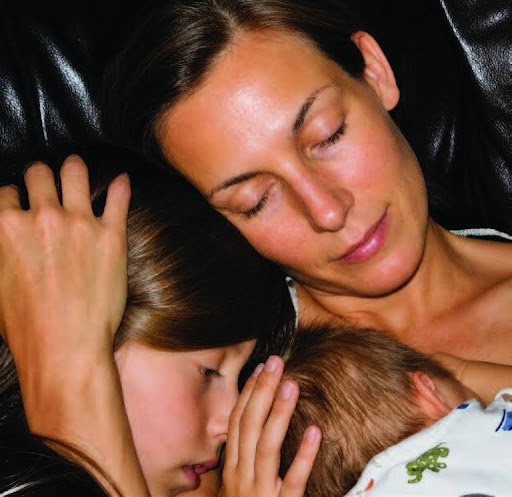
The internationally acclaimed singer, actress and composer discusses the deeply personal origins of her new 18-language global peace project, the political conscience that has shaped her work for more than four decades, and why she believes mothers can help build common ground across borders.
For more than four decades, Ute Lemper has built a career around artists and ideas that refuse to separate music from the world in which it is made.
From her defining interpretations of Bertolt Brecht and Kurt Weill to Songs for Eternity, built around music written by Jewish prisoners in ghettos and concentration camps, and her deeply personal work exploring the life and moral courage of Marlene Dietrich, Lemper has repeatedly returned to questions of memory, responsibility, injustice and what artists can say when societies are under strain.
Her latest project, MOTHERS, brings that lifelong conversation directly into the present.
Originally written several years ago for a European television series Lemper hosted about motherhood, the song returned to her this year with a very different sense of urgency. A mother of four, Lemper found herself increasingly concerned by war, political division, disinformation and the world her children and future generations will inherit. She rewrote the song, expanded its message and ultimately developed MOTHERS across 18 languages, creating culturally distinct versions intended to carry the same appeal for peace, dignity, equality and the protection of children across borders.
The scale of the project also led Lemper into new creative territory. Using AI-assisted production alongside her original composition, musicians, translations, editing and artistic direction, she explored the instruments, voices and musical traditions of cultures ranging from Iran and the Middle East to Brazil, Ukraine, Russia and beyond. At the same time, she created a visual component combining animation with real protest footage and launched mothersoftheworld.music, which she hopes can develop into an international resource and community for women.
In the conversation below, Lemper discusses the personal and artistic journey behind MOTHERS, why the political concerns she first encountered through Brecht and Weill feel newly urgent, what she discovered by hearing the same song through 18 cultures, and her hope that the project might ultimately move beyond the recording itself.
Q: MOTHERS began several years ago, but you felt this was the moment to bring it back and expand it. What changed for you, personally and creatively, that made the project feel urgent now?
A few years ago, in New York, I wrote and produced MOTHERS as the title song for a television series I was hosting in Europe. The program brought together mothers from all kinds of professions, cultures and backgrounds, giving them a space to tell their stories—their struggles, their choices, their fears, their strength.
I loved the song from the beginning. It had a very positive energy, and I felt there was something powerful in the idea of giving mothers a voice through music. In the end, the television production chose an instrumental theme instead, and I moved on with my life and my music, into many other adventures.But the song never really left me.
This spring, it suddenly came back to me with an entirely different urgency. As a mother of four children, I had been feeling anxiety about their future—and about the future of our world everywhere. We are living through wars and terrible divisions, through the overwhelming influence of the internet, AI and social media, and through a time when so many young people seem exposed to forces that we, as parents, cannot control.
I suddenly felt that MOTHERS needed to become something much bigger than the song I had written years before. I rewrote the second verse. I made it more provocative, more urgent, confronting the wars, the cuts of education budget, the inflation, politics, whose consequences are so often carried by ordinary people and, most painfully, by children.
And then I began to imagine the song not simply as a recording, but as a movement—a call for mothers to stand up and sing. To sing because we are worried for our children. To sing for peace.
Because underneath all the things that divide us—nationality, religion, politics, language, history—I believe that what unites us is infinitely stronger. A mother worrying about her child in one part of the world understands something profound about a mother worrying about her child on the other side of a border, even when their governments may call them enemies.
That thought became the heart of the project.
I developed MOTHERS in 18 languages, deliberately choosing languages that carry cultural and symbolic meaning across our world—including languages spoken on opposing sides of conflicts, in troubled regions and in places shattered by war. Languages of people who may be called adversaries, aggressors or victims depending on which side of a border they were born.
But mothers share a universal soul and task.
Q: You’ve described a “red thread” of social and political consciousness running through your career, from Brecht and Weill to Songs for Eternity and your work around Marlene Dietrich. How does MOTHERS fit into that larger journey?
You are mentioning some of the projects that are most important to journey, because they really define my artistic identity and, in many ways, explain why I have always felt that being an artist also carries a mission.
Forty-five years ago, I began singing the music of Bertolt Brecht and Kurt Weill. Both were visionaries, and both were forced into exile by Nazi Germany. Weill had to flee his homeland because he was Jewish, but also because he represented everything the Nazis despised in modern culture: he was one of the most progressive composers of his time, constantly exploring new musical languages and breaking through the boundaries of traditional composition. Brecht, in his writing, examined humanity—and particularly the failure of humanity when it becomes seduced and corrupted by money, greed and power.
Beginning in the 1980s, Universal/Decca recorded twelve albums with me as a protagonist singer of this repertoire. My first recording, Ute Lemper Sings Kurt Weill, remained number one on the crossover charts for an entire year, and in 1989 I received the Billboard Artist of the Year Award.
To be able to sing this repertoire in concerts around the world was an extraordinary privilege, but it also came with an enormous sense of responsibility. I had to confront the history of my native country, Germany, in depth. I had to speak about the Holocaust, about the crimes of the Nazis, and about the generation of my grandparents. As a young German, I found it incredibly painful to have been born carrying a German passport and the weight of that history. Perhaps that was also part of the reason I left Germany so young—first for England, then France, and eventually the United States, where I have lived for a very long time. I. consider myself a New Yorker and found a sense of belonging in this city of emigrants.
But leaving Germany did not mean leaving that history behind.
The anger I have always felt toward the generations of perpetrators—and toward their inability, or unwillingness, to mourn, to confront what they had done, and to truly address the past—has fueled my artistic flame throughout my life. Many of my projects were born from this deep existential conflict: the need to stand up, to sing, to remember, and to confront the truth, however painful that truth may be.
My project Songs for Eternity was born directly from that urgency. It is built around songs written by Jewish prisoners in concentration camps and ghettos. For me, it is one of the most heartbreaking concerts I have ever performed. These songs grab me by the throat. Sometimes I almost choke—with pain, sorrow in regards to the circumstances in which these words and melodies were created. They are not simply historical documents. They are some human voices that survived but most of them did not and died in Auschwitz.
And then there is Marlene Dietrich.
Marlene was an extraordinarily progressive and courageous woman. Of course, she was also the great Hollywood diva, appearing in many major films during the 1930s and 1940s and 50s. But behind that glamorous image was a German expatriate who made an extraordinary moral choice. She became an American citizen and supported the American war effort against Nazi Germany, famously entertaining Allied troops, often close to the front lines.
For that decision, she paid a very personal price.
For 5 decades after the war until her death, many Germans regarded her as a traitor to the Fatherland rather than honoring the courage it had taken for a German woman to stand against Hitler and the Nazi regime.
Thirty-nine years ago, I spoke with Marlene Dietrich on the telephone in Paris. She was 87 years old, living in isolation, largely confined to her apartment and hiding from the world. I was already a well-known young actress and singer living in Paris. We had an extraordinary three-hour conversation between two German expatriates from completely different generations.
She spoke to me about her tragedy: the painful realization that she could never truly return home, that the country of her birth had rejected her because she had made the honorable decision to stand against the Nazis.
That conversation stayed inside me for decades.
Eventually, I created an entire theatrical work around those three hours on the telephone—a dialogue across generations between two German women who had both left their country, for very different reasons and at very different moments in history.
And once again, the project became about confronting truth.
There is a profound irony in Marlene’s story. Today, she has become an icon of the new Berlin—a symbol of the cosmopolitan, liberated, modern city that emerged after the Cold War and German reunification.
But Marlene never got to know this, no one had apologized to her.She died in Paris in 1992, having spent the final years of her life in isolation, still carrying the wounds of rejection from her homeland.
That contradiction is deeply moving to me. And perhaps it connects all of these projects—from Brecht and Weill, to Songs for Eternity, to Marlene Dietrich, and now, in a very different way, to MOTHERS.
They are all about memory, conscience and humanity. They are about refusing to look away. And they are about my belief that an artist can use a voice not only to call for compassion and express outrage. A voice to remember, to question, to confront—and ultimately, I hope, to create an awareness or even a movement.
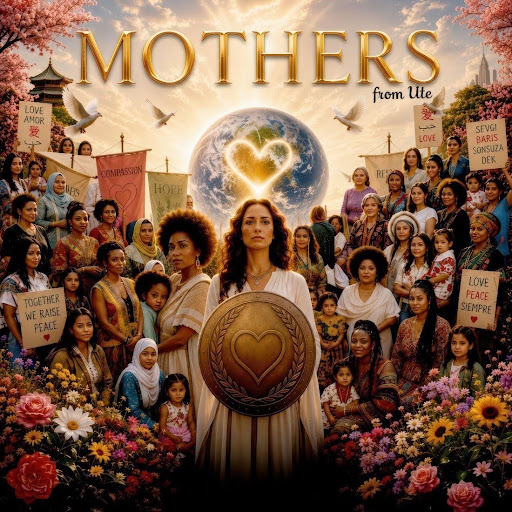
Q: The project now exists across 17 languages and cultures. What did you learn from hearing the same song take on different musical identities, and were there any versions that surprised you in particular?
I studied the historical instruments, musical traditions and sensuality of each culture, because music, to me, is always an expression of the soul—and also, in some mysterious way, of the soul of a country and its people.
I did not want simply to translate MOTHERS and place the same musical arrangement underneath eighteen different languages. I wanted each version to have its own identity, its own temperament, its own colors and emotional landscape. So I created completely different versions, inspired by the musical language and instrumentation of each culture.
Of course, my own musical taste is present in all of them. I love a certain groove, a particular harmonic deviation, an unexpected instrument or color that suddenly opens a door into another sometims foreign sound. But I also wanted to listen—to allow each language and culture to lead me somewhere I might not have gone otherwise.
I love the Spanish and Brazilian Portuguese versions. They have such wonderful grooves, such warmth and sensuality, and they are sung with tremendous heart.
But perhaps the version that surprised and moved me most deeply is the one in Farsi, the Persian language of Iran. Especially at this moment, when Iran is so often perceived through the terrible lens of conflict, politics and war, I find it incredibly moving to listen instead to the musical soul of its people. Listen to the Farsi version and you hear something else entirely: tenderness, longing, beauty, melancholy, dignity.
It makes me wish that politics, war and religious conflict did not so often stand in the way of our ability to see the human heart of another nation. Because there is a heart and soul of a people that can indeed be felt through their music. Music can reveal something that politics often obscures.
The Kurdish and Turkish versions are also extraordinarily powerful. There is a sadness in them, a depth and an ancient emotional quality that I find very moving. The Hebrew version became something so beautiful and deeply felt—a true cry for peace. Very much next to the Arabic version that equally transcends a mothers cry for peace.
And then there are the Ukrainian and Russian versions. It was very important to me that both languages exist side by side within this project. They carry a musical identity that is similar, a history and a passion that is close to each other. Here they can exist together, expressing the same fundamental earthy pulse in music and strong female mature voices.
The English version shows very much my own taste in music. It has a touch of R&B, Jazz and Soul, something of the extraordinary music of the 1970s, but at the same time it feels completely contemporary. It is intimate, but it also has the energy of a musical call to action—a mother’s voice inviting other mothers to stand beside her, to raise their voices and join the protest simply by singing this song.
All eighteen versions sound profoundly different, and yet underneath those differences lives exactly the same human emotion.
Don’t only listen to the version in your own language.
Listen to Farsi. Listen to Hebrew and Arabic. Listen to Russian and Ukrainian. Listen to Kurdish and Turkish. Listen to languages belonging to people you may know almost nothing about.
You might be surprised by what you feel.
That became one of the great discoveries of this project for me. Behind politics, religion, borders and all the noise surrounding us, you suddenly hear the heart and soul of another culture.
Q: At the center of MOTHERS is the idea that mothers across different countries, religions and political systems share many of the same hopes and fears for their children. Why did motherhood feel like the right lens through which to talk about peace?
Hermann Hesse wrote about an idea that has always resonated deeply with me: what unites us is so much stronger than what divides us. He questioned the borders human beings create between one another or countries and believed in searching for our common humanity rather than constantly reinforcing our divisions. Borders are arbitrary. He was writing these thoughts more than a hundred years ago, and yet they feel painfully relevant today.
I would add something: no mother wants her child’s life to be compromised by war, violence, chaos or the ambitions of those in power. No mother gives birth to a child imagining that one day this child will become a soldier to die for his country or a victim of somebody else’s war.
I sometimes wonder what our world would look like if more women were running our countries and shaping the structures of power. I would hope for governments with a more profoundly human set of priorities: educating the next generation, protecting children, accepting and respecting people in all their differences, creating inclusive societies, helping those who live in poverty, and showing compassion toward immigrants and refugees—particularly those forced to leave their homes because of corruption, violence, persecution or humanitarian catastrophe.
Perhaps there would also be a different instinct toward war: a greater reluctance to sacrifice human lives for obscure political or economic interests, and a stronger resistance to systems in which enormous wealth can continue to accumulate while others are condemned to poverty.
Systemic racism is another wound in our societies that requires not only political solutions, but a motherly empathy who fights for breaking the vicious cycle—for the sake of the children and creating better perspectives.
I don’t believe that simply being a woman guarantees compassion or wisdom. But women know something very particular about struggling for equality within structures that were historically created and controlled by men. The centuries-long fight for emancipation is still not finished. It continues in our workplaces, our homes, our institutions and in societies around the world.
And mothers so often carry these struggles and the burden first. They carry the responsibility for the next generation while confronting the inequalities and failures of the present one.
Q: You are a mother of four yourself. How has raising your children changed the way you think about war, inequality, freedom and the responsibility one generation has to the next?
I am profoundly worried about the future, as I have already expressed. Sometimes I wonder whether, if I were young today, I might think twice about bringing children into this world. That is a painful thought for me, especially as a mother of four, because having children has been one of the deepest and most meaningful experiences of my life.
My son and my daughter are now at an age when starting families of their own has become a very real possibility. And I see their hesitation and their concern. They think seriously about the world their children would inherit, about the instability of our times, and about the enormous influences and realities a new generation will have to navigate.
These are questions that touch me deeply. Every generation of parents has worried about the world into which their children are born, but today the challenges feel crazy complex and difficult to predict. And when I imagine my own children asking themselves whether they feel confident enough about the future to bring another generation into it, my concerns are no longer abstract. It becomes profoundly personal.
Q: The lyrics move beyond nurture and protection into very direct ideas about dignity, equality, women’s rights and the right to have a voice. How important was it for MOTHERS to carry that sense of agency as well as compassion?
When I wrote about the demand for equality, dignity and the right to vote—and when I spoke of men’s wars, crimes and costly games of power—I was thinking especially of mothers in parts of the world who still do not experience the freedoms and level of emancipation that many of us have come to take for granted.
I was thinking of women whose voices are restricted or silenced, whose choices about their own lives are limited, and who are nevertheless expected to carry enormous responsibility for their families and children. Their struggle belongs within MOTHERS as much as ours does.
For me, the song is therefore not only a plea for peace. It is also a call for dignity, equality and the fundamental right of every woman to have a voice in shaping her own life, her society, and the future her children will inherit.
Q: You grew up in postwar Germany and came of age during the Cold War. Do you see echoes of that divided world in the current moment, and did that history shape the way you approached this project?
We are definitely in the middle of another Cold War. The world is becoming increasingly divided into competing spheres of power, each determined to demonstrate its superiority—economically, scientifically, technologically and, most disturbingly, through its military power and machinery of war.
It is crazy and sad to see how much of this reminds of the Cold War of the last century: the competition, the suspicion, the rhetoric, the accumulation of weapons, and the constant need to prove that one side is stronger than the other.
“History wanted to be a good teacher, but it could not find any students.”
Q: You used AI-assisted production to help bring MOTHERS into different languages and musical traditions, while keeping your own composition and artistic direction at the center. What interested you about using the technology in that way, and where do you draw the line between a tool and an author?
Of course I could not have created a project of this scale without the incredible assistance of AI. As much as I am nervous about the whole AI revolution and its potentially uncontrollable power, I have to say that in this project I experienced the best side of it. The musical tools were incredibly sensitive and helped me create exactly what I had envisioned. The voices had such human soul, that it was equal to the best that I ever heard before.
The song and composition already existed, recorded by me singing with my guitarist, myself on piano and keyboards, and my drummer and percussionist. I translated and adapted all the lyrics myself and checked them with friends who are native speakers. Then I experimented with the different cultural sounds, instruments, voices and arrangements until each version had its own identity.
After many attempts and options, I brought everything into my good old Pro Tools system, separated the tracks and started my own puzzle of editing, changing and adding human elements—voices, instrumental lines and details.
I was like a movie director that invented landscapes of sound and brought mothers and their voices to life inside a storyline that was my song. AI was literally an extention of my capacites and it made a dream come true. I knew what I wanted, but it allowed me to take the music into places that would otherwise have required an enormous production, perhaps a million dollars and five years of work. I feel I was a movie director here that created with a special team an incredible movie.
Q: The video combines more hopeful imagery with real protest footage from around the world. What did you want the visual side of the project to communicate that the song alone could not?
It is always very powerful to see images that transport the music to a viual dimension. I worked with animations that were supposed to create fantastic elements, like women flying on peace doves over war zones, protecting children and ancient mothers carrying the secrets of life to new generations of mothers. I animated the covers in the different languages, but then I included, in the second half of the video, real protest footage to give the video the urgency of the matter and create a very contemporary context. Mothers all over the world marching in the streets in solidarity for peace. It climaxes on this young teen age woman who just looks straight and serious with fear into the camera and shows us the bridge into the future.
Q: You’ve spoken about wanting MOTHERS to grow beyond the recordings, with women eventually singing it in their own countries and languages. If the project reaches people in the way you hope, what would you ultimately like it to become?
I would love the song to become a symbol for a movement of women taking this mission into their own hands and singing the song in the streets of capitals and small towns, across many countries and cultures.
Haha, I am dreaming… Of course I am a dreamer. But I am not the only one. And perhaps one day you’ll join us…IMAGINE
Seriously, I would love to create MOTHERS music festivals around the world, inviting great singers from everywhere to sing their own versions and inspire thousands of people, in their own originality.
And I would especially love to see women in cultures where they still experience oppression through traditions, conventions or religion begin to raise their voices—to liberate themselves and sing together in a quest for emancipation, dignity and equality.
I have also created a website, mothersoftheworld.music, to give the project a life and purpose beyond the music itself. My hope is to build a place where mothers can find meaningful resources and support—mothers struggling with mental health, abuse or other critical situations, teenage mothers, and women around the world who simply need to know where they can turn for help.
The website is still growing, and this is where I would love people to become involved. Please visit mothersoftheworld.music, share it with mothers who may need support, and send us information about trusted organizations, initiatives and resources in your own country or community that we should include. If you know of people doing important work for mothers and women, I want to hear about them.
The goal is to build this together, country by country and community by community, into a real international network of information, connection and compassion for mothers who need it.
IMAGINE
Related Posts


Latest Backstories
-
 Judy Collins Enchants at Brown County Music Center: A Night to Remember, March 22, 2025
The air was thick with anticipation on March 22,...
- March 28, 2025
-
 The story behind “Diamonds and Rust”, a song by Joan Baez, about Bob Dylan
The story behind the song “Diamonds and Rust” is...
- April 1, 2024
-
 Backstory: Bob Seger’s “Shame on the Moon”
Bob Seger’s 1982 hit “Shame on the Moon” was...
- December 18, 2023
-
 The Real Story behind the song, “Mr. Bojangles”
In our continuing weekly series, we examine the backstory...
- September 6, 2023
-
 RIP Robbie Robertson.
Canadian, Robbie Robertson, legendary lead guitarist of “The Band”...
- August 9, 2023
-
 Celebrate Good Times: The Story Behind Kool and the Gang’s Hit Song
If you have ever been to a wedding, a...
- July 12, 2023
Latest Photo Galleries
-
 Styx in Noblesville Indiana, the Windy Cities Tour
Styx brought their signature blend of progressive rock anthems,...
- August 12, 2026
-
 Jack Johnson Delivers Warm Vibes and Surprise Collaborations at Ruoff Music Center
On a stormy July 4 evening at Ruoff Music...
- July 6, 2026
-
 Post Malone Brings Big Energy to Lucas Oil Stadium on the Big Ass Stadium Tour
Post Malone has carved out a special place in...
- June 15, 2026
-
 Kenny Wayne Shepherd Band Honors 30 Years of Ledbetter Heights at Brown County Music Center
The Kenny Wayne Shepherd Band rolled into the Brown...
- May 7, 2026
-
 The Black Keys: Gritty Blues-Rock Gold at Louisville Palace
The Black Keys have a way of making a...
- May 5, 2026
0 comments